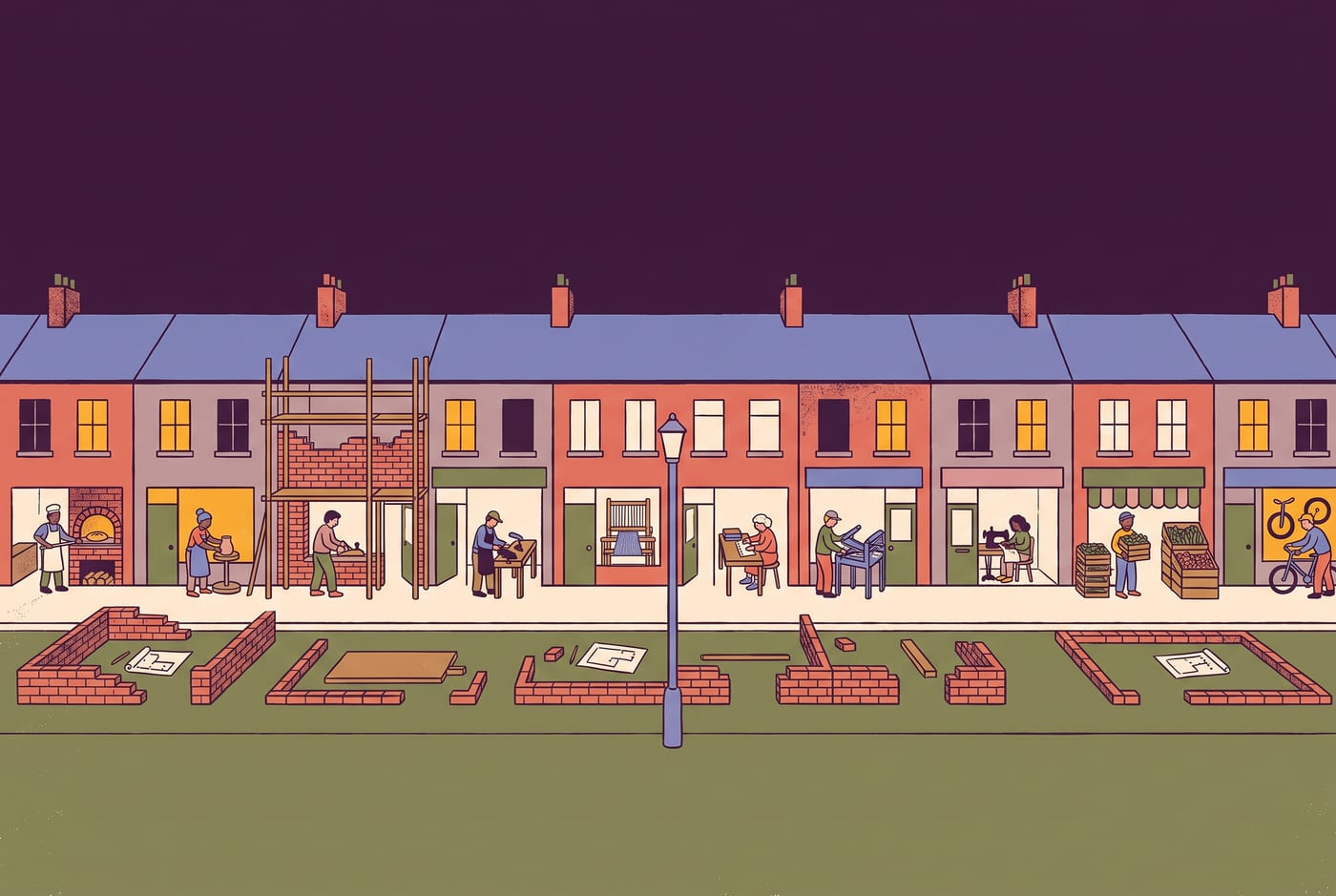
In this section of the report we present our typology of the disciplines of civic renewal, and, for each discipline, an assessment of the architecture that supports the work. Our goal is to bring more shape and visibility to work that has often been hard to see. We also hope that a typology can help practitioners to situate themselves and each other in a wider field, and help funders and policymakers to shape the support they provide.
How we have structured the typology
As we mapped disciplines, we began to notice two other aspects to the work of civic renewal. First, some methods or techniques are used in multiple disciplines. Second, we began to see a certain disposition or mentality which was present in almost all of the best work we saw, and which we came to think of as a ‘civic ethic’.
The typology therefore comprises:
The fifteen disciplines, grouped into six higher-level categories
A set of cross-cutting practices that run across many disciplines
A civic ethic that characterises the work as a whole
For each of the fifteen disciplines we describe the work as we saw it in our site visits and interviews, give examples, and assess the maturity of support. Our assessments of support cover five domains:
How the work is codified, e.g. in frameworks, occupational standards and role profiles
Institutions that support and develop the work
Learning, training and continuing development
Communities of practice and peer networks for practitioners to join
The work’s academic underpinnings
Our assessments of support are presented in summary for each discipline, before being brought together in a table at the end of this part of the report.