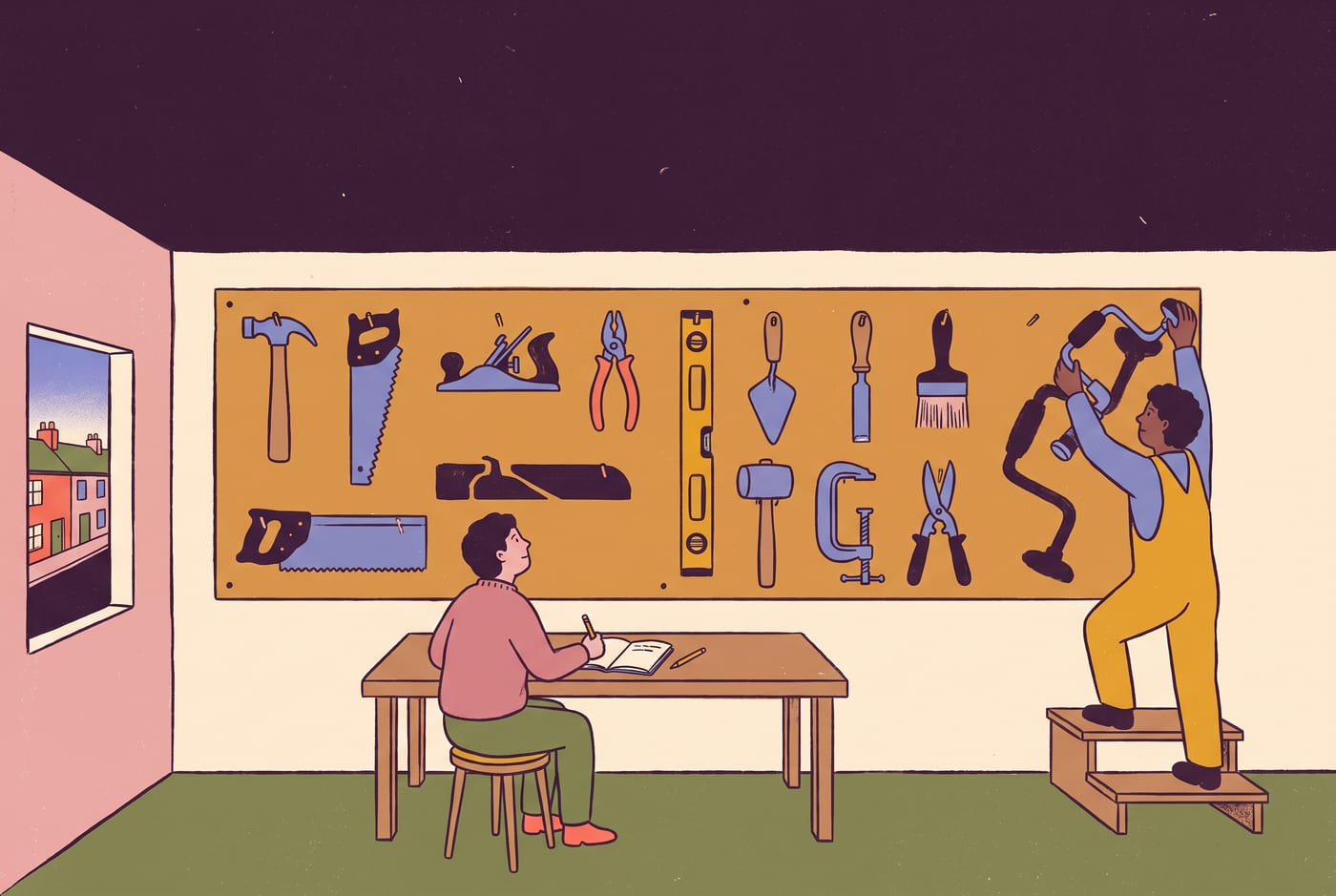
As we moved through our research, we got an ever better appreciation for the nuances involved in the work of civic renewal. Through our interviews and visits, we soon realised we were seeing not just a range of different disciplines but also a set of cross-cutting practices – techniques and ways of working that seemed to be used by many disciplines, much as a technique like statistical analysis can be used by many different academic disciplines, from physics to sociology.
Along the way, we also accumulated a series of distinctions and contextual observations that we found useful in making sense of what we saw – about how one discipline can operate at different levels of a system, how the disciplines of civic renewal sit in relation to the state, and how they relate to the longer tradition of community development. We comment on these issues here, before turning in Part 2 to the typology itself.
Disciplines versus practices
We see a discipline as a recognisable cluster of skills, mentalities, and methods, used purposefully to achieve a particular end. Disciplines are sufficiently coherent that an architecture can grow around them (e.g. meetups, journals, training, and syllabuses). They often come to be associated with a sense of belonging or professional identity. Disciplines are about more than techniques; they include mentalities, ethics, and cultures.
We see a practice as a technique or method, or a family of techniques or methods, which is used by many different disciplines. School subjects are a useful analogy: physics, chemistry, and biology are disciplines; while statistical analysis, running experiments, and constructing proofs are practices used in all these disciplines. Sometimes, a practice can also grow to become a discipline in its own right; an example is qualitative research, or a research method like ethnography.
Levels of the system
Most of the disciplines we have named can be practised at multiple levels of a system. A civic peer connector, for example, can operate at the level of an individual community centre; at the level of a city, connecting networks across it; or at national level, convening a community of practice. In some cases, practitioners work their way up through these levels as they become more senior. In other cases the levels require very different skill sets, meaning that people can spend whole careers getting better at one level.
These levels become important when we begin to assess professional support. Support for a discipline is often uneven across levels, and a discipline can look well supported until you ask: ‘at what level?’ Several of the best-resourced training routes we found equip a person to do the work at junior level, or in a local place, but with no route to a more senior or geographically scaled version of the role. It will often be useful, then, to specify both a discipline and the level at which is being carried out.
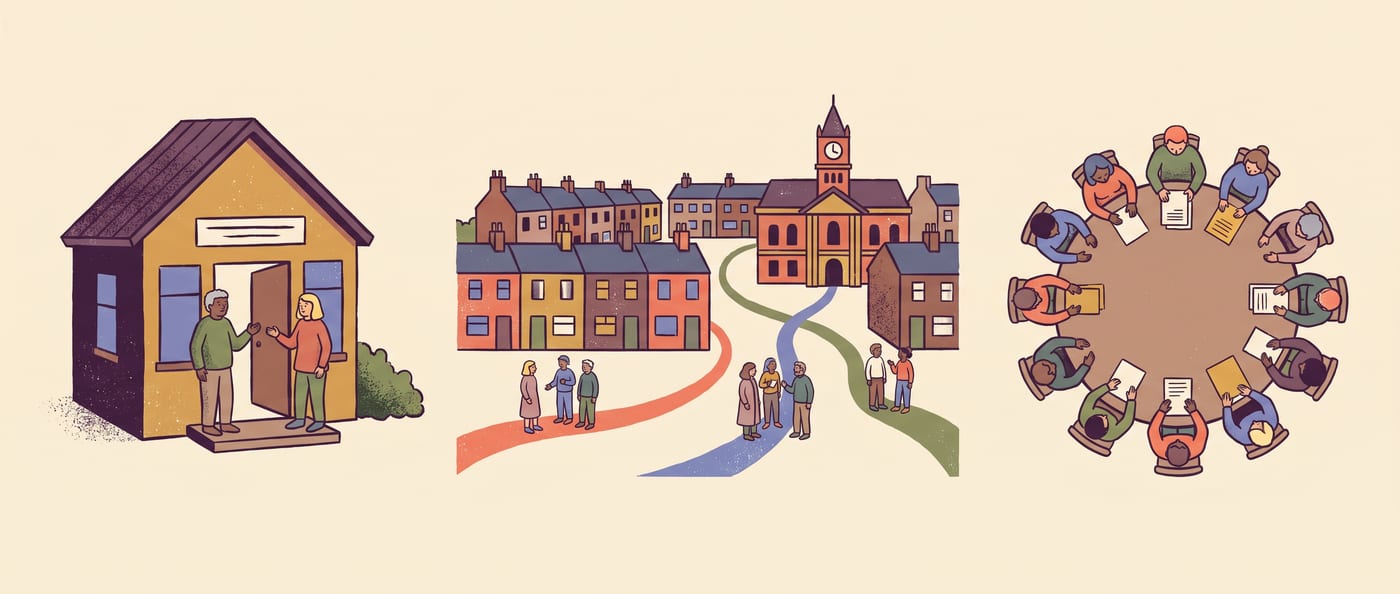
- A community centre
- Operating at the level of an individual project or initiative
- A place
- Connecting networks across a town, city, or region
- A national level
- Convening a community of practice or rewiring institutions
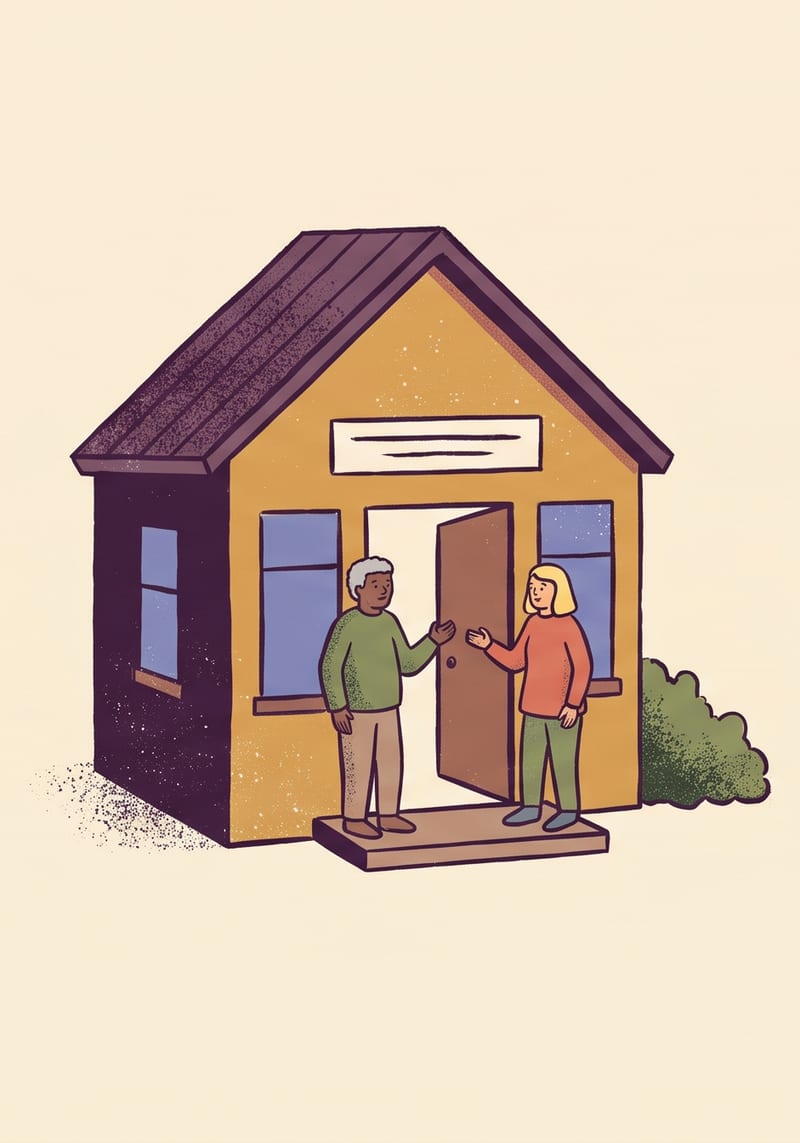
- Level 1 of 3
A community centre
Operating at the level of an individual project or initiative
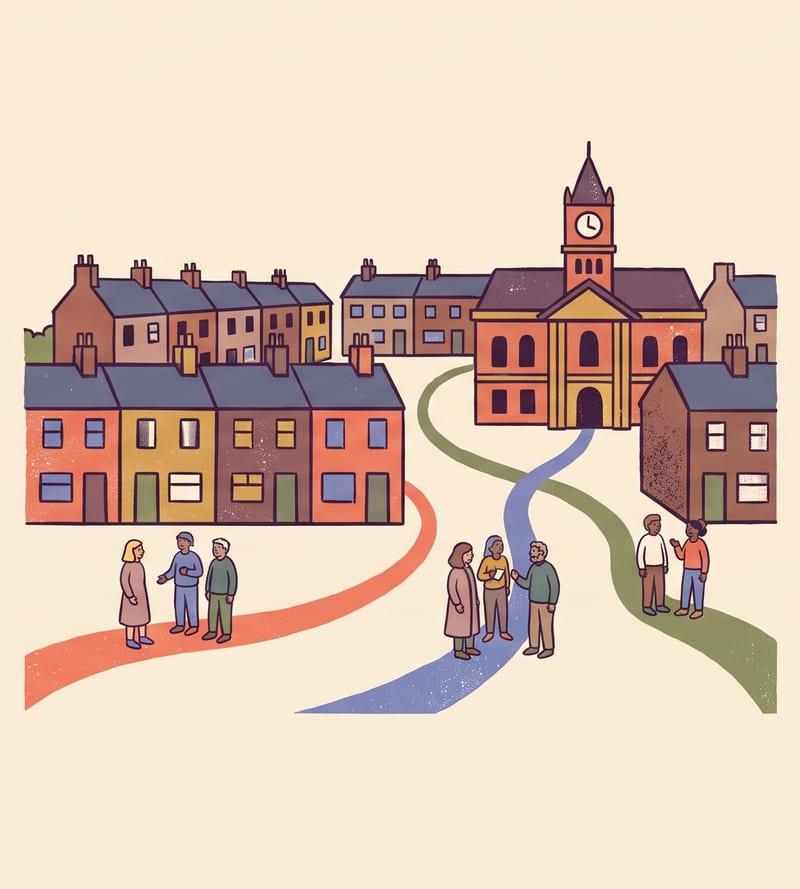
- Level 2 of 3
A place
Connecting networks across a town, city, or region
- Level 3 of 3
A national level
Convening a community of practice or rewiring institutions
Note: Support for a discipline is often uneven across levels; a discipline can look well supported until you ask ‘at what level?’
Conditions and sequencing
Different disciplines and practices are needed in different combinations at different stages of the work of civic renewal. In our research, we found that this was less about time and more about conditions. For example, work of civic imagination can depend on there already being sufficient trust in a place. A community might need to start with healing and peace-building, or with building relationships through the practical work of reclaiming a civic space, before they are able to ask big questions about the future.
We find it helpful to think of an analogy with the disciplines involved in building a house: architects do their work early; then bricklayers and carpenters come in; then plumbers and electricians; then plasterers and painters; while the architect might return later to shape how the work is proceeding. The question ‘which disciplines do you need for civic renewal to flourish?’ is inseparable from questions about local conditions, sequencing, and maturity.
Position vs. the state
Some of the disciplines we describe sit in the state and look outward into communities (e.g. relational practitioners in public services; civic-minded school leaders). Others sit in communities, either working within the community they are part of (e.g. peer navigators), or looking back at the state (e.g. institutional wranglers). Many of the disciplines we describe are best thought of as standing in the historic third space of the commons, and indeed much of the work we describe can be thought of as variants of commoning.
None of these relationships are clean. Increasingly the state funds roles (e.g. social prescribing link workers, Local Area Coordinators, Community Health and Wellbeing Workers) that sit, as best they can, in the civic sphere. The position of a discipline is less about where the funding comes from and more about the look and feel of the work – what logic the work runs to, and how the role is perceived by the people around it.
How does community development fit in?
One term we heard often from practitioners was ‘community development’. This raised the question of how community development relates to the work we are describing: is it a discipline, or a practice, for example, or something else?
Over time, we came to think of community development as a process, happening in a place, typically involving many of the disciplines we describe in this report. It is the broad and long-running work of building connection, capacity, power, and economic sustainability in a place. Most of the fifteen disciplines we describe show up in this process at some point, and several are essential.
Seen this way, we could understand civic renewal as a twenty-first-century evolution of community development. The goal is similar though arguably broader. What has changed is the level of ambition and urgency but also the terrain – a more depleted state, a thinner associational life. We also now have a different understanding of the relevant craft, and arguably a more granular sense of the disciplines and practices involved.
We could say that community development has broadened, deepened, and fragmented, much as academic subjects broaden and deepen over time, splitting and branching into different and distinct sub-disciplines; particle physics, astrophysics, materials science. Some of the ‘newer’ disciplines we describe here might previously have been seen as aspects of community development. Others are more genuinely novel.
Our goal in this report is not to displace or re-label the historic and important work of community development, but to bring new levels of specificity to the disciplines and practices involved when this work is done today.